WKTV
MVCC opens new ATTAIN Lab in Utica
Sep 24, 2026
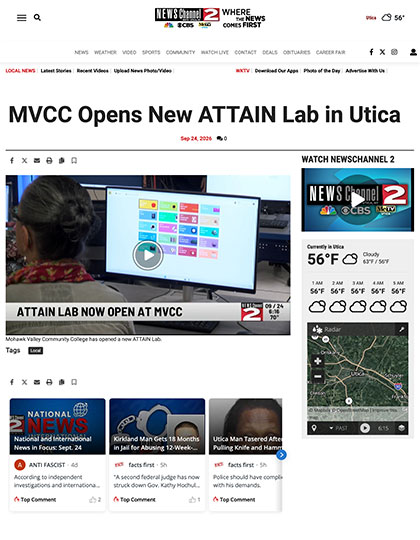
Mohawk Valley Community College opened a new SUNY ATTAIN Lab in Utica, expanding access to free technology training and digital skills support for local residents.
Source: WKTV

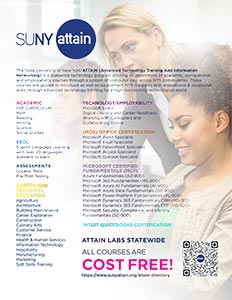
Many aspects of life today require a degree of computer literacy. SUNY’s Advanced Technology Training and Information Networking (ATTAIN) labs help you learn the basic skills you’ll need to get started, whether you’re looking for a job or considering advancing your education – at no cost to you.
Take a look at what ATTAIN offers and visit one of the ATTAIN Lab links to apply for ATTAIN services.
Celebrating our milestones through the media.
Sep 24, 2026
Mohawk Valley Community College opened a new SUNY ATTAIN Lab in Utica, expanding access to free technology training and digital skills support for local residents.
Source: WKTV
May 5, 2026
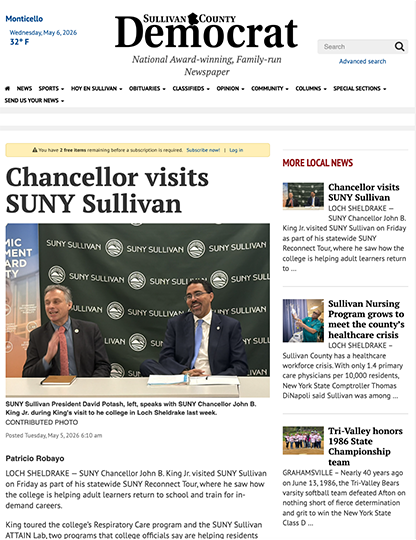
SUNY Chancellor John B. King Jr. visited SUNY Sullivan to highlight the college’s Respiratory Care program and ATTAIN Lab as part of the statewide SUNY Reconnect initiative for adult learners.
Source: Sullivan County Democrat
Sep 2, 2025
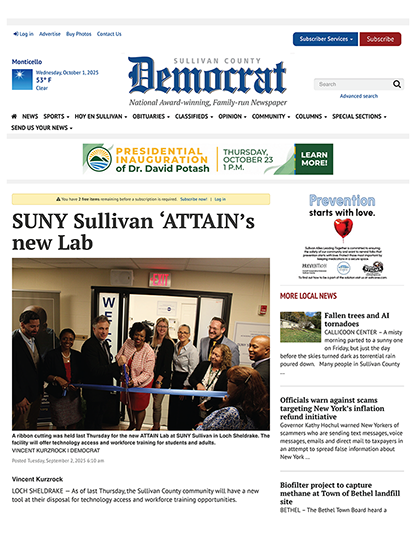
A ribbon cutting ceremony was held to celebrate the opening of the new SUNY ATTAIN Lab at SUNY Sullivan…
Source: Sullivan County Democrat
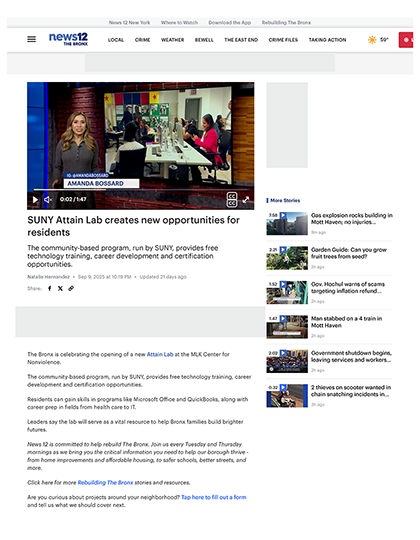
Sep 9, 2025
The MLK ATTAIN Lab opened with a community ribbon cutting, offering free technology training…
Source: News 12 The Bronx
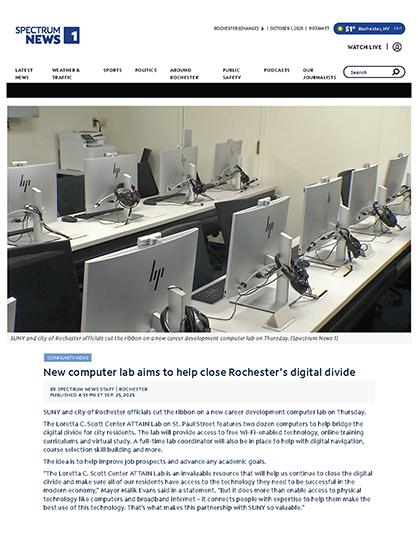
Sep 25, 2025
City and SUNY officials held a ribbon cutting for the Loretta C. Scott Center ATTAIN Lab, a career-focused computer lab…
Source: Spectrum / Rochester
The first step is to connect with your local ATTAIN lab to explore your options.